

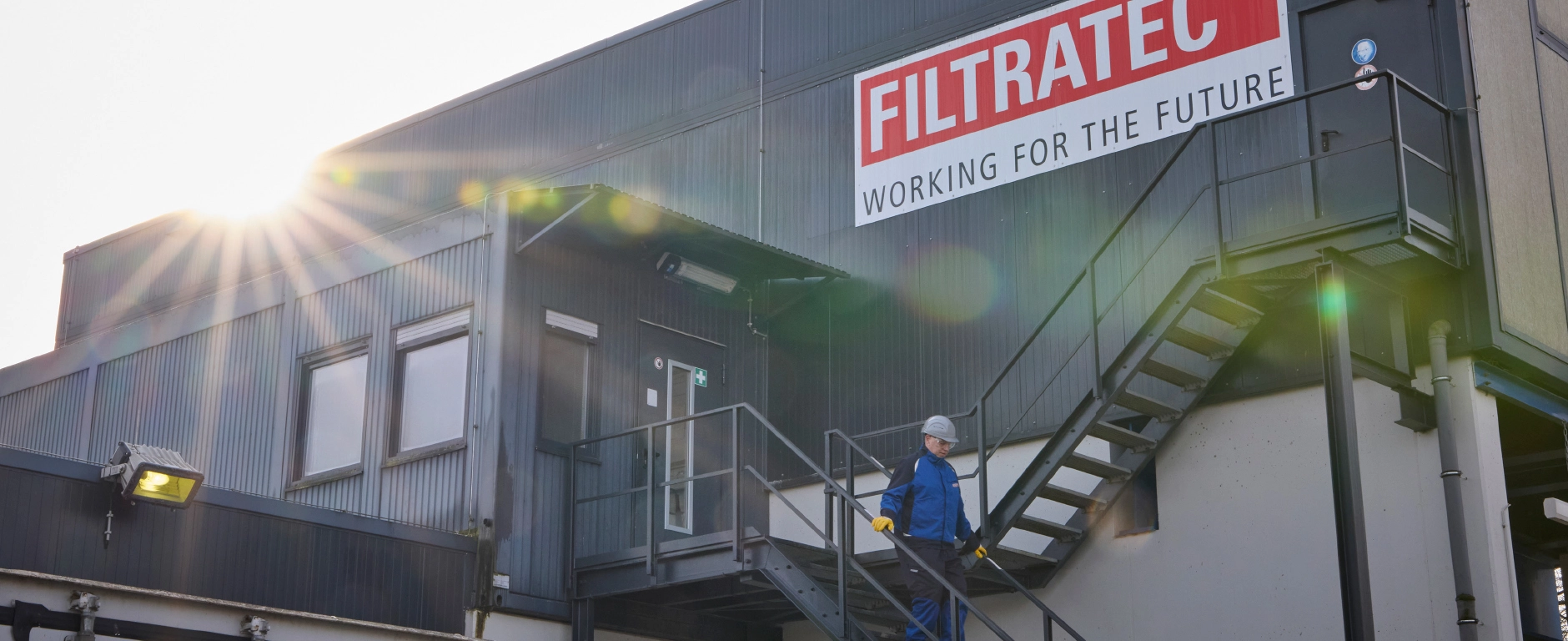

Tank cleaning and sludge treatment using a fully enclosed system.
A joint project
A team of specialists from BUCHEN UmweltService (Region West) and FILTRATEC found themselves facing an interesting challenge. They had been commissioned to clean an oil tank with a fixed roof at an oil refinery. Their tasks involved removing, treating and disposing of the approximately 280m³ of highly compacted sludge generated from the plant’s wastewater treatment operations. The sludge contained a variety of substances including sand, rust and plastics and was, to some extent, releasing hydrogen sulphide, carbon monoxide and volatile hydrocarbons. This meant that the flashpoint was below 30°C, making it highly flammable.
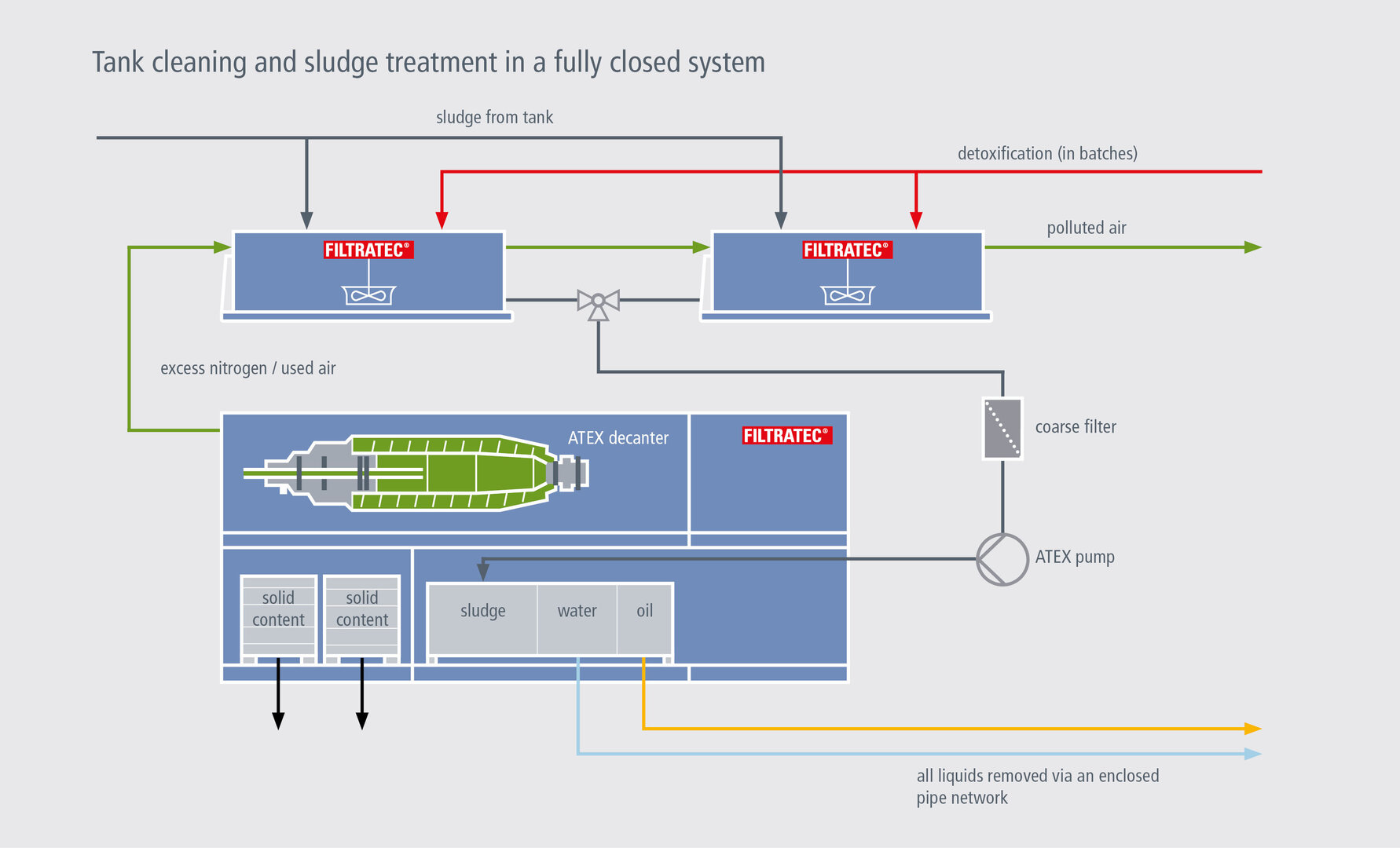
The challenge here was to carry out the work using a fully enclosed system under ATEX conditions to prevent pollutants from being released that would have exceeded the workplace limits and/or led to unpleasant odours.
The technology
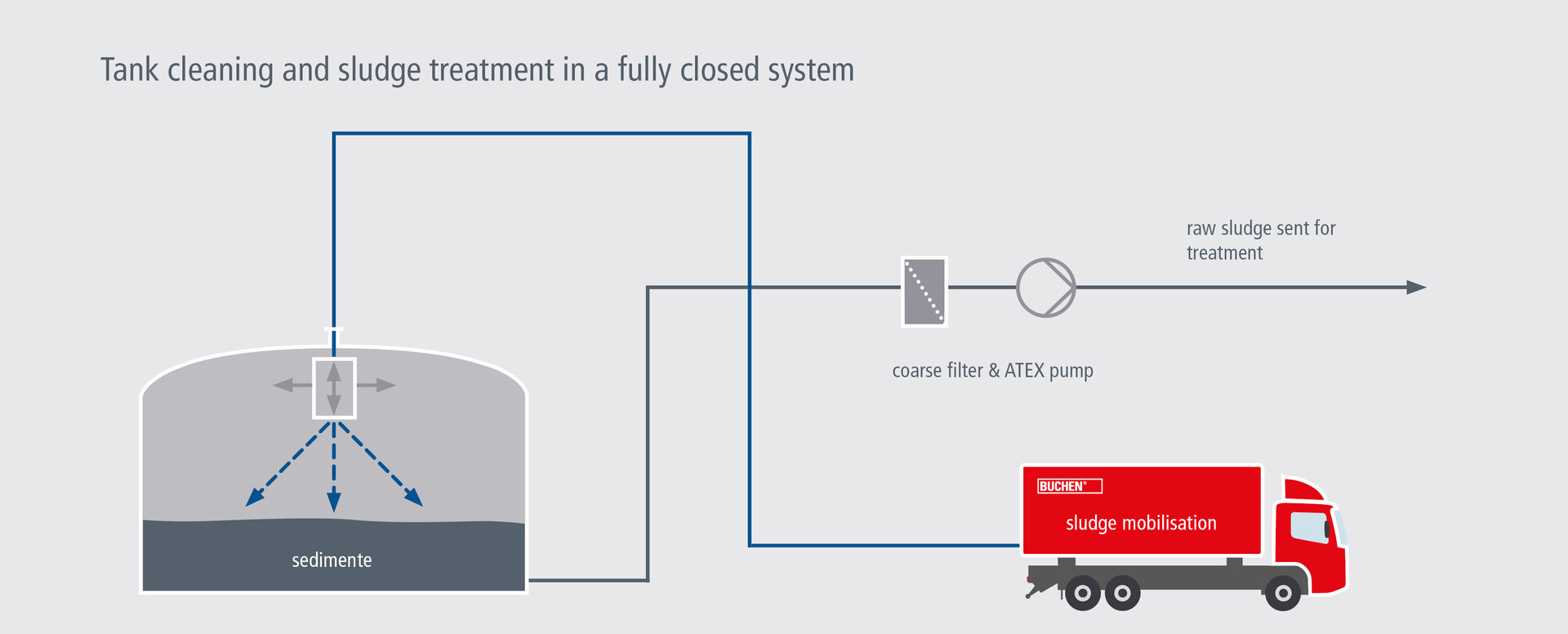
BUCHEN deployed high-pressure cleaning equipment to detach and remove the sludge deposits. The operatives regulated and controlled the jet spray from outside the tank – enabling them to pinpoint the material that had to be removed without having to enter the tank themselves.
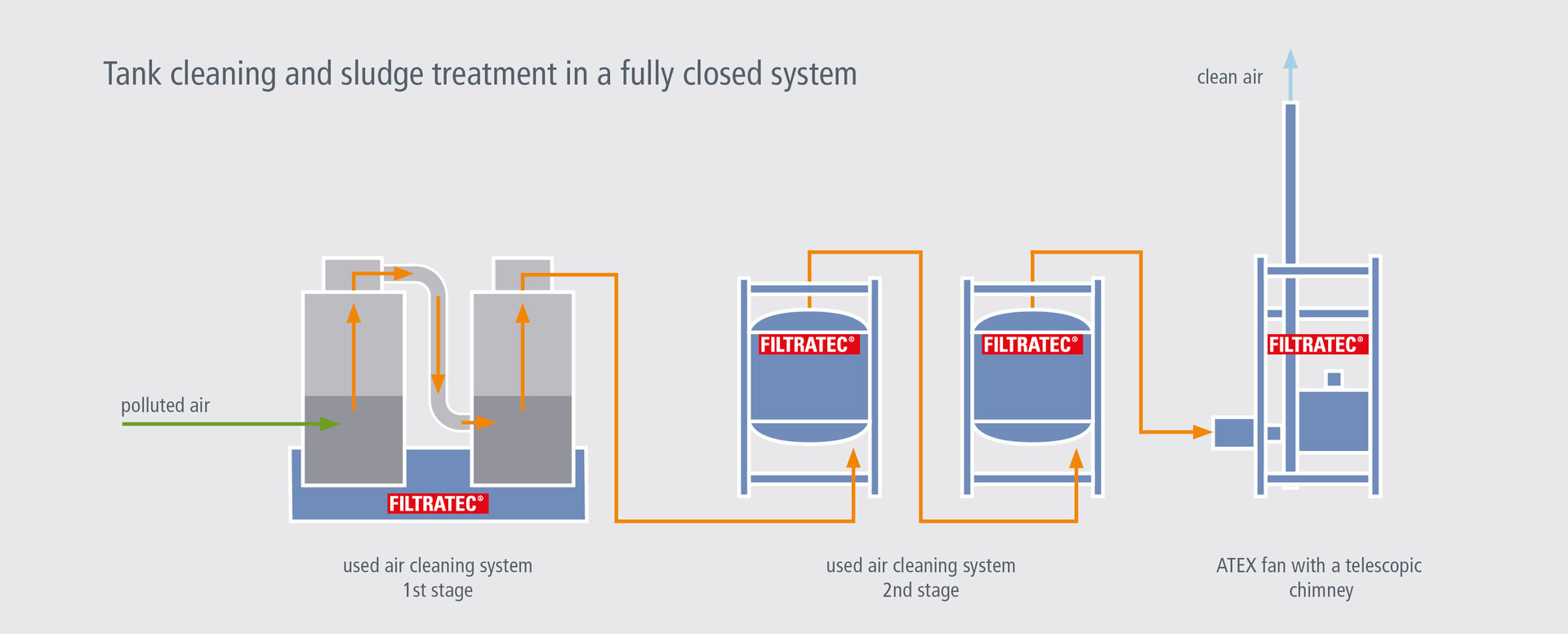
FILTRATEC brought a wide range of equipment with them so that they could both remove and detoxify the sludge as well as separate the sludge with a gas-tight, 3-phase decanter on site at the customers’. The entire sludge treatment process was performed using a fully enclosed system that met all ATEX conditions. FILTRATEC also integrated the cleaning of the exhaust air into its treatment process. The tank was made inert with nitrogen to provide the necessary explosion protection.
The work was carried out 24/7 to complete the assignment as quickly as possible. Indeed, the whole project (including the subsequent final cleaning tasks) was finished successfully in a fraction of the time that would have been needed had conventional cleaning systems been used. FILTRATEC and BUCHEN were able to hand over the cleaned tank to their client having met all of their requirements. This process created a number of advantages: a short completion time, high health, safety and environmental standards, cost savings (fewer staff compared to conventional methods) and less waste to be disposed of thanks to the efficient sludge separation operations.
Tank cleaning and sludge treatment using a fully enclosed system
REMONDIS Maintenance & Services’ business locations
The whole picture - with just a single click. Find out here where our Group's branches are located, what services they offer and how to contact them.
The REMONDIS Group’s locations
Discover the world of REMONDIS with its approx. 1,500 branches and associated companies in over 30 countries.