


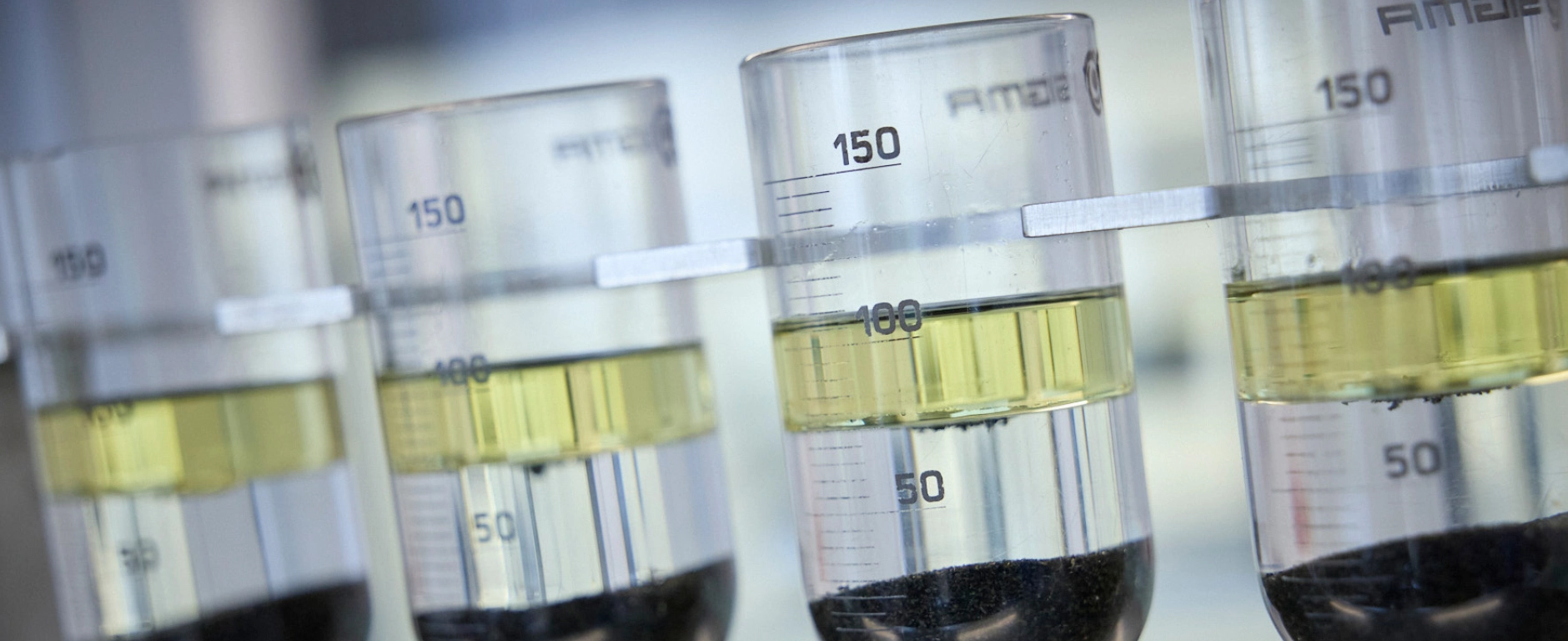

We separate the contents
Our specialist oil-sludge separation services are primarily delivered to the petrochemical industry Three-phase decanters are used here to separate the sludge into oil, water and solids in one single work process.

Crude oil sludge
Slop residue
Oily wastewater sludge
Sludge containing solvents
Conventional three-phase decanters
FILTRATEC uses conventional, non-explosion-proof three-phase decanters when the flashpoint of the product that is to be worked on is clearly higher than the temperature required to do the work
Why? Because an ‘ex-zone’ or explosive atmosphere is created inside the decanter if a combustible substance is processed above its flashpoint – even if the decanter itself was not set up in a designated ex-zone. Which is why we always play it safe here at FILTRATEC!
Gas-tight three-phase decanters
FILTRATEC currently operates five mobile gas-tight three-phase decanter units to separate combustible and harmful substances. The system used to convey the sludge in these ATEX-compliant units is made fully inert with nitrogen. Moreover, we are also able to adjust the temperature as required – ensuring that we achieve outstanding results and deliver the highest levels of protection to prevent explosions and to keep the environment and operatives safe.
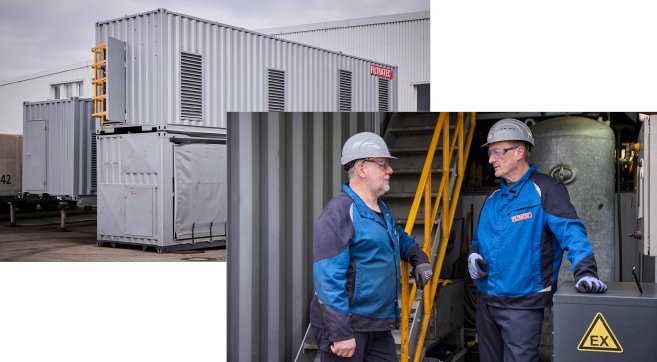
This mobile system enables the product to be treated on-site at the place it is generated, significantly reducing the number of trips required to transport the waste. Recovering the valuable substances (oil) conserves natural resources. As a result, we are helping to promote sustainability and our customers benefit from lower waste disposal costs and higher yields.
These units offer some key advantages compared to conventional decanters:
They are designed & operated in line with the ATEX directive
There are no diffuse emissions thanks to the gas-tight system
The sludge & combustible fluids can be safely processed no matter what the flashpoint
Thanks to these gas-tight three-phase decanters, FILTRATEC is able to achieve maximum output by controlling the temperature as well as exemplary levels of environmental protection, emission control and explosion protection
REMONDIS Maintenance & Services’ business locations
The whole picture - with just a single click. Find out here where our Group's branches are located, what services they offer and how to contact them.
The REMONDIS Group’s locations
Discover the world of REMONDIS with its approx. 1,500 branches and associated companies in over 30 countries.